Book Appointment Now

Chemical Peel Treatments – Benefits, Types, Results & Aftercare
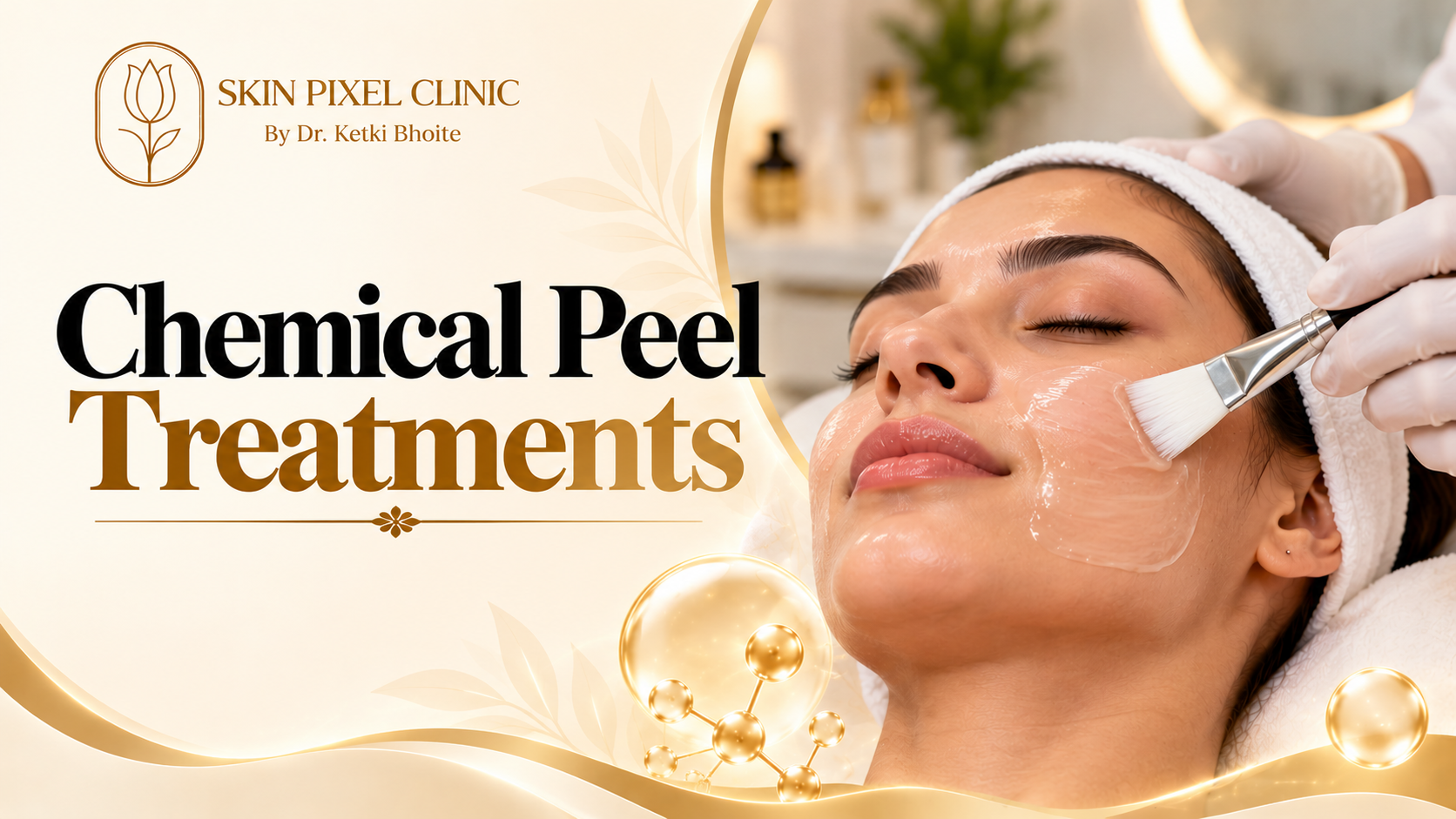
Chemical peel treatments are popular dermatological office procedures for improving uneven skin tone, dullness, acne-related marks and certain signs of premature skin ageing. By using carefully selected exfoliating solutions, chemical peels help remove damaged superficial skin cells and encourage skin renewal.
However, not every chemical peel works in the same way. The type of peel, its strength, your skin type and the concern being treated all influence the choice of peel, it’s immediate after-effects, recovery and ultimate results.
If you are considering a chemical peel, understanding how the procedure works, who may benefit from it, how to prepare your skin before it and how to take care of your skin afterwards can help you make an informed decision.
At Skin Pixel Clinic in Thane, a personalised approach to skin care helps determine which treatment options may be appropriate for individual skin concerns.
What Is a Chemical Peel Treatment?
A chemical peel is a dermatological procedure in which a specially formulated active ingredient is applied to the skin to produce controlled exfoliation. Depending on the formulation and required treatment depth, it can help improve the appearance of the skin’s surface and address selected pigmentation, acne and texture concerns.
Chemical peels may be recommended for people experiencing:
- Comedonal acne (black heads/white heads)
- Inflammatory acne
- Post-acne Pigmentation
- Melasma and other causes of pigmentation
- Uneven skin tone or dull looking skin
- Early signs of photoaging
- Infections such as warts
- TCA CROSS for acne scars
The treatment is customised according to the individual’s skin condition, sensitivity and goals. A consultation is important because some concerns, such as melasma or deeper acne scars, may require a different or combined treatment approach.
Learn more about the options available on our Chemical Peel Treatments service page.
How Do Chemical Peels Work?
The skin naturally sheds dead cells as part of its renewal cycle. However, dead-cell accumulation, sun exposure, acne and other factors can contribute to uneven texture and a dull appearance.
Chemical peels use exfoliating agents to loosen the connections between skin cells or create controlled exfoliation at a selected depth.
Depending on the formulation, a chemical peel may help to:
- Exfoliate damaged surface skin cells.
- Improve the appearance of uneven skin texture.
- Reduce the appearance of certain types of pigmentation.
- Help manage selected forms of acne and pore congestion.
- Support a smoother and more even-looking complexion.
The results depend on the peel selected and the concern being treated. Chemical peels do not permanently stop ageing or guarantee the removal of pigmentation, acne scars or wrinkles.
Different Types of Chemical Peel Treatments
Chemical peels are generally classified according to how deeply they act within the skin. The appropriate option depends on the skin concern, the treatment objective and the individual’s risk of side effects.
1. Superficial Chemical Peels
Superficial peels primarily target the outermost layer of the skin. They are often considered for mild dullness, uneven tone, superficial pigmentation and certain forms of acne.
Depending on the formulation, common ingredients include glycolic acid (lower concentration), lactic acid and salicylic acid.
Potential benefits include:
- Smoother-looking skin
- Improved surface radiance
- Better management of selected acne concerns
- Improvement in some superficial dark marks
- Generally shorter recovery than deeper peels
Several sessions may be recommended to achieve the desired improvement. Temporary redness, dryness, sensitivity or flaking can still occur.
2. Medium-Depth Chemical Peels
Medium-depth peels penetrate further into the skin than superficial peels. Depending on the formulation, they may be considered for more pronounced sun damage, selected pigmentation concerns, fine lines and certain superficial textural changes.
These treatments require careful assessment because they can cause more noticeable redness, peeling and downtime.
Medium-depth peels are not appropriate for everyone. Skin tone, previous pigmentation problems, medical history and the risk of post-inflammatory hyperpigmentation must be considered before treatment.
3. Deep Chemical Peels
Deep peels reach deeper layers of the skin and have a greater potential for significant effects as well as complications.
They require specialist assessment and are associated with longer recovery and greater risks, including scarring and pigmentary changes. They are not routinely necessary for common concerns such as mild dullness or superficial pigmentation.
The choice of peel should always be based on clinical suitability rather than selecting the strongest treatment available.
Which Chemical Peel Ingredients Are Commonly Used?
Different exfoliating agents have different properties. The ingredient alone does not determine the treatment outcome; concentration, formulation, application technique and skin condition also matter.
Glycolic Acid Peel
Glycolic acid is an alpha-hydroxy acid (AHA) commonly used for exfoliation. It may help improve superficial roughness, dullness and selected pigmentation concerns.
Salicylic Acid Peel
Salicylic acid is a beta-hydroxy acid (BHA) that is particularly useful for oily, acne-prone skin and pore congestion. Its suitability depends on the severity of acne and the individual’s skin condition.
Lactic Acid Peel
Lactic acid is an AHA that can help exfoliate the skin’s surface. It may be considered for selected cases of dullness and uneven texture, with formulation and strength chosen according to skin sensitivity.
Other Professional Peel Formulations
Other ingredients and combination peels may be used for particular concerns. Stronger formulations require appropriate professional supervision and should not be selected solely because they are advertised as providing faster results.
A dermatologist can determine which ingredient and treatment depth are suitable for your skin.
What Skin Concerns Can Chemical Peels Help Improve?
Chemical peels can be useful for several concerns, although their effectiveness varies according to the underlying condition.
Dull Skin and Uneven Texture
Exfoliation may help remove accumulated dead skin cells, making the surface appear smoother and fresher.
Comedones and inflammatory acne
Certain superficial peels, particularly those formulated for oily and acne-prone skin, may help reduce pore congestion and improve selected acne concerns. They are not a substitute for appropriate acne treatment when active acne is persistent or severe.
Post-Acne Pigmentation
Chemical peels may help improve some dark marks left after acne. However, acne-related pigmentation can worsen if the treatment causes excessive irritation, particularly in skin prone to post-inflammatory hyperpigmentation.
Other causes of Pigmentation
Selected superficial pigmentation concerns may improve with appropriate peels. Melasma and deeper pigmentation require careful diagnosis because inappropriate exfoliation can worsen the condition.
Early Signs of Skin Ageing
Some chemical peels can improve the appearance of superficial fine lines, roughness and sun-related skin changes. They do not replace procedures designed for deeper wrinkles or significant skin laxity.
If your primary concern is broader skin rejuvenation, explore the clinic’s laser treatments to understand another category of professional skin treatments. The appropriate option depends on your specific concern and clinical assessment.
What Happens During a Chemical Peel Session?
The procedure varies according to the type of peel selected, but a professionally performed treatment generally involves several stages.
Step 1: Skin Assessment
Your skin is assessed to identify the primary concern, skin sensitivity, relevant medical history and any factors that may increase the risk of complications.
Step 2: Skin Preparation
The skin is cleansed, and additional preparation may be performed depending on the treatment protocol. You may also receive instructions about skincare products to avoid before your appointment.
Step 3: Application of the Peel
The selected solution is applied according to the treatment protocol. You may experience temporary tingling, warmth or stinging. The clinician monitors the skin and follows the appropriate procedure for the specific peel.
Step 4: Completion of Treatment
Depending on the formulation, the solution may need to be neutralised or removed, while certain products are designed to remain on the skin for a specified period.
Step 5: Aftercare Instructions
You receive guidance on cleansing, moisturising, sun protection and when to restart your regular skincare products.
Following these instructions is essential for supporting recovery and reducing the risk of irritation or pigmentation.
How Long Does It Take to See Chemical Peel Results?
The timeline depends on the peel’s depth, the skin concern and individual healing.
Some people notice a fresher or smoother appearance after the initial recovery period. Pigmentation, acne-related marks and textural concerns may require several treatments and additional time before meaningful improvement becomes visible.
Superficial peels generally involve less downtime than medium-depth peels, while deeper procedures require more extensive recovery.
It is important to distinguish temporary brightness from sustained improvement in an underlying skin condition. Your treatment plan should include realistic expectations about both.
Chemical Peel Aftercare: How to Protect Your Skin
Aftercare is an important part of the treatment process. Skin may become temporarily sensitive, dry, red or flaky, depending on the peel used.
1. Apply Broad-Spectrum Sunscreen
Protect your skin from UV exposure with a broad-spectrum sunscreen of SPF 30 or higher, following your clinician’s specific instructions. Sun protection helps reduce the risk of additional pigmentation during recovery.
2. Use a Gentle Cleanser
Avoid harsh cleansers, scrubs and products that leave the skin feeling tight or irritated. Follow the cleansing routine recommended for your treatment.
3. Keep Your Skin Moisturised
Use a suitable moisturiser to support the skin barrier and reduce dryness. Your clinician may recommend particular products based on your skin condition.
4. Do Not Pick or Peel Flaking Skin
Allow the skin to shed naturally. Pulling or picking at peeling skin can increase irritation and the risk of scarring or pigmentation.
5. Temporarily Avoid Irritating Active Ingredients
Retinoids, exfoliating acids, benzoyl peroxide and other potentially irritating products may need to be paused before or after treatment. Follow your clinician’s instructions about when to stop and restart each product.
6. Avoid Additional Irritating Procedures
Do not combine treatments or schedule another procedure such as waxing, threading, bleaching or shaving during recovery unless your treating clinician confirms that it is appropriate.
Contact your clinician if you develop severe or worsening pain, blistering, significant swelling or signs of infection.
Are Chemical Peel Treatments Safe for Indian Skin?
Chemical peels can be suitable for many Indian skin types, but treatment selection requires particular care because medium-to-deep skin tones may have a greater tendency to develop post-inflammatory hyperpigmentation after irritation or injury.
A suitable treatment plan should consider:
- Your natural skin tone and pigmentation history
- Whether you have melasma or post-acne Pigmentation
- Skin sensitivity and any active inflammation
- The type and depth of the proposed peel
- Previous reactions to skincare products or procedures
- Your ability to follow aftercare and sun-protection instructions
A stronger peel is not necessarily a better peel. In some cases, a more conservative approach is preferable to minimise irritation and pigmentary complications.
Who Should Avoid or Delay a Chemical Peel?
Chemical peels may need to be postponed or avoided in certain circumstances.
These can include active skin infections, open wounds, significant skin irritation or an impaired skin barrier. Recent procedures and the use of certain medications can also affect treatment suitability.
People with a history of abnormal scarring, recurrent cold sores or significant pigmentation complications should discuss these factors before treatment.
Pregnancy and breastfeeding may affect which ingredients or procedures are appropriate. Certain peels, particularly salicylic-acid or stronger formulations, may require additional precautions. Do not assume that every peel is suitable during pregnancy or breastfeeding.
Always disclose your medical history, allergies, medications and current skincare routine before undergoing a chemical peel.
Chemical Peel vs. Facial: What Is the Difference?
A conventional facial generally focuses on cleansing, hydration and surface skincare. A professional chemical peel is a more targeted exfoliating procedure that uses a selected chemical formulation to address particular skin concerns.
A chemical peel may be considered when the goal is to improve specific issues such as superficial pigmentation, acne-related marks or rough texture. A facial may be more appropriate for routine cleansing and hydration.
Neither option is universally better. The right choice depends on your skin condition, treatment goals and tolerance for downtime.
How Many Chemical Peel Sessions Are Needed?
There is no fixed number of sessions suitable for everyone.
The recommended treatment schedule depends on:
- The type and strength of the peel
- The concern being treated
- Your skin’s response to the first session
- The amount of recovery required
- Your clinician’s assessment of treatment progress
Some concerns may improve with an individual session, while others benefit from a planned series of superficial peels. Sessions should be spaced according to the treatment protocol and your skin’s recovery.
Repeated treatments should not be performed simply to accelerate results. Allowing the skin to recover between sessions helps reduce the risk of irritation and complications.
Frequently Asked Questions About Chemical Peel Treatments
1. Do chemical peels remove pigmentation permanently?
Chemical peels may improve selected types of pigmentation, but they do not guarantee permanent removal. Conditions such as melasma can recur, and sun exposure or inflammation can contribute to new pigmentation.
2. Can chemical peels help with acne scars?
Chemical peels may help improve some superficial acne-related marks and mild textural irregularities. Deep, indented or tethered acne scars generally require a different treatment strategy or a combination of procedures.
3. Does a chemical peel hurt?
You may experience temporary tingling, warmth, stinging or burning sensations during treatment. The intensity varies according to the formulation and treatment depth. Severe discomfort should be reported immediately to the treating clinician.
4. Will my skin peel visibly after treatment?
Not necessarily. Some superficial peels produce subtle flaking, while others can cause more noticeable peeling. Visible peeling is not a reliable measure of treatment effectiveness.
5. Can I wear makeup after a chemical peel?
This depends on the type of peel and the condition of your skin. Makeup may need to be avoided until the skin has recovered sufficiently. Follow the specific instructions provided by your clinician.
6. Can I get a chemical peel if I have sensitive skin?
Some people with sensitive skin may be suitable for carefully selected treatments, while others may need to avoid peels until irritation is controlled. A skin assessment is important before proceeding.
7. Are home chemical peels the same as professional peels?
No. Professional treatments may use different formulations, concentrations and application protocols. Strong chemical solutions should not be used at home without appropriate professional guidance, as misuse can cause burns, scarring and pigmentation.
8. How do I choose the right chemical peel treatment?
Start by identifying your main concern and obtaining a professional assessment. The appropriate peel should be selected according to your skin type, medical history, treatment goals and tolerance for recovery.
Choose the Right Chemical Peel for Your Skin
Chemical peels can be a useful part of a personalised skincare plan when selected and performed appropriately. They may help improve selected concerns involving dullness, uneven texture, acne-related marks and superficial pigmentation, but the outcome depends on the underlying condition and treatment approach.
The key is to choose a treatment that suits your skin rather than selecting a peel based on popularity or strength.
At Skin Pixel Clinic, a personalised assessment can help determine whether a chemical peel is appropriate for your skin and what results may realistically be expected.
Explore our Chemical Peel Treatments service page to learn more about the treatment, or visit the Skin Pixel Clinic website to explore the clinic’s services.
If you are considering a chemical peel treatment in Thane, consult a qualified dermatology professional to discuss your skin concerns and suitable options.